
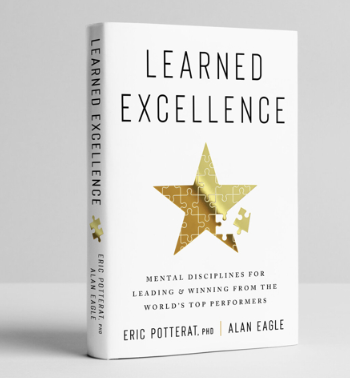
“Learned Excellence” argues that greatness is not a genetic lottery but a trainable set of mental disciplines, and that is the book’s most provocative and empowering claim.
What the book is really about
Eric Potterat distills decades of work with Navy SEALs, Olympic athletes, and elite professionals into a framework that anyone can apply to their own “moments that matter.” The book is less about hacks and more about building a durable inner architecture for performance that holds under pressure, uncertainty, and fatigue.
At its core are five disciplines: clarifying values and goals, shaping mindset, refining process, building adversity tolerance, and protecting balance and recovery. The promise is not overnight transformation but a systematic path to becoming the person who can repeatedly deliver in high‑stakes situations.
Values and goals: starting from identity
The first discipline surprised me in its simplicity: top performers start by getting brutally clear on who they are and what they stand for. Potterat pushes readers to write a personal credo and translate it into specific, time‑bound goals rather than vague aspirations.
What struck me is how much this mirrors mission planning in elite environments: before tactics comes intent. In everyday life, this translates into a shift from chasing metrics (titles, income, follower counts) to aligning decisions with a small set of non‑negotiable values.
Mindset and process: shifting focus from outcomes
The book’s middle chapters argue that excellence is a function of mindset plus process, not motivation alone. Mindset here is not pop‑psych optimism but a deliberate way of interpreting stress, failure, and uncertainty so they become data instead of identity threats.
Equally important is Potterat’s insistence that amateurs obsess over results while experts obsess over process. He encourages readers to design a repeatable “performance process” for their own domain, then iterate on two variables at a time—a disciplined, almost scientific approach to self‑improvement.
Adversity tolerance: redefining toughness
The section on adversity tolerance is where the book feels closest to its SEAL and elite‑sport roots. Potterat frames resilience not as stoic numbness but as the capacity to stay calm enough under pressure to access your skills when others are overwhelmed.
I appreciated the granular emphasis on after‑action reflection: dissecting what went wrong, why it happened, and how to adjust your process so you are less fragile next time. This turns setbacks into required reps on the way to mastery instead of verdicts on your ability.
Balance and recovery: sustainability as strategy
The final discipline—balance and recovery—pushes back against the glamorization of burnout that often surrounds high performance. Potterat treats sleep, relationships, hobbies, and active recovery as strategic assets that expand your long‑term capacity to handle challenge.
This reframes rest from a reward you earn after grinding to a critical part of the performance cycle itself. For anyone who has learned the hard way that white‑knuckle effort doesn’t scale, this message feels both corrective and deeply practical.
Why this book matters now
In a culture obsessed with shortcuts and “talent,” “Learned Excellence” is a reminder that elite performance is built, not bestowed. The book does not promise to turn readers into Navy SEALs or Olympians, but it does offer a clear, evidence‑based playbook for thinking and training more like them in whatever arena matters most to you.



Leave a Reply